The technician closes the furnace panel and hands you a quote. The draft inducer motor has failed, the repair is $850, and the furnace is 14 years old. The heat works again by tonight if you say yes.
Most Kansas City homeowners decide that moment on gut feel. That is how people end up paying for a repair in October and a full replacement in January. The furnace repair vs. replacement decision is not a guess. It comes down to three things you can check in a few minutes: the furnace’s age, the repair cost, and whether there is a safety problem.
This guide gives you the numbers and the rules to make that call with confidence, using Kansas City repair prices and the local permit, rebate, and efficiency factors that change the math here.
Key Takeaways
- Most furnace repairs in Kansas City cost a few hundred dollars. Ignitors, flame sensors, and capacitors are almost always worth fixing.
- Use the $5,000 rule: multiply the furnace’s age by the repair cost. If the result is over $5,000, replacement usually makes more sense.
- A cracked heat exchanger is a safety issue, not a repair line item. On an older furnace, it means replacement.
- Furnaces under 10 years old should usually be repaired. Furnaces over 15 years old deserve a replacement quote alongside any major repair.
- Replacement in Kansas City, MO requires a mechanical permit, the federal 25C tax credit ended in 2025, and Spire rebates apply only to new high-efficiency equipment.
The Short Answer: Age, Cost, and Safety Decide It
Here is the decision in one paragraph. Repair the furnace when it is relatively young, the fix is a routine part, and the problem doesn’t affect safety. Replace it when it is near the end of its life, the repair is expensive, or the problem involves combustion or the heat exchanger.
Everything else is detail. But the detail matters, because a $250 repair on a 17-year-old furnace can be smart while an $1,100 repair on a 13-year-old furnace can be a waste.
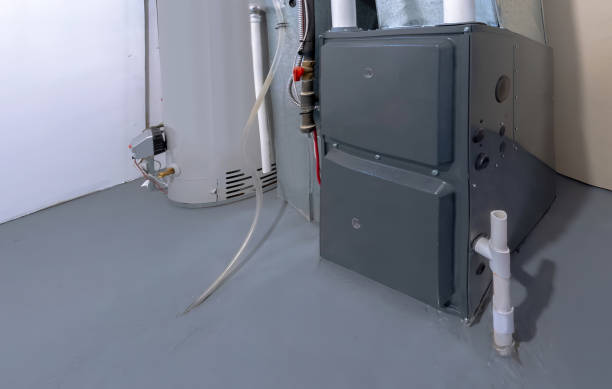
A gas furnace typically lasts 15 to 20 years, according to the U.S. Department of Energy. Where your furnace sits in that window shapes every repair decision, so start by finding its age on the data plate inside the furnace door.
What Common Furnace Repairs Cost in Kansas City
You cannot weigh repair against replacement without knowing what the repair should cost. Prices vary by part, brand, and time of day, but the ranges below reflect current Kansas City pricing for parts and labor.
| Repair | Typical Kansas City Cost |
| Flame sensor | $80 to $250 |
| Hot surface ignitor | $100 to $250 |
| Capacitor | $150 to $400 |
| Thermostat | $150 to $500 |
| Pressure switch | $200 to $400 |
| Draft inducer motor | $400 to $900 |
| Gas valve | $400 to $1,000 |
| Control board | $400 to $1,200 |
| Blower motor (ECM) | $600 to $2,300 |
| Heat exchanger | $1,800 to $3,500 |
The average furnace repair in the area runs about $231, with most falling between $96 and $370. For the full breakdown, including diagnostic fees and after-hours labor rates, see our guide to furnace repair cost in Kansas City.
Notice the pattern. The top half of the table is cheap wear parts that fail on furnaces of every age. The bottom half is where the repair vs. replacement question gets real.
The $5,000 Rule for Furnace Repair vs Replacement
The simplest tool for this decision is the $5,000 rule. Multiply your furnace age by the repair cost. If the number is over $5,000, replacement is usually the better investment. If it is under, repair is usually the smarter move.
Here is how it plays out on real Kansas City quotes:
- 6-year-old furnace, $650 gas valve: 6 x $650 = $3,900. Repair it.
- 14-year-old furnace, $850 inducer motor: 14 x $850 = $11,900. Get a replacement quote.
- 18-year-old furnace, $180 ignitor: 18 x $180 = $3,240. A cheap repair is fine, but start budgeting for replacement.
- 11-year-old furnace, $1,400 ECM blower motor: 11 x $1,400 = $15,400. Replacement deserves a serious look.
The rule works because it weighs two things together. A young furnace can justify an expensive repair because it has years left to pay it back. An old furnace cannot, because the next part is often right behind the first one.
The rule has limits. It does not account for safety, efficiency, or warranty coverage. Treat it as a starting point, then check the factors in the sections below before you sign anything.
How Furnace Age Changes the Decision
Age is the factor that shifts the most over time. The same repair can be a clear yes on one furnace and a clear no on another.
Under 10 Years Old: Repair Almost Anything
A furnace under 10 years old still has most of its life left. You can repair nearly every problem, including bigger issues like a control board or blower motor.
The one exception is the heat exchanger. Even on a newer furnace, a cracked heat exchanger is a major decision. Check whether the manufacturer’s parts warranty still covers it before you assume you need a replacement.
10 to 15 Years Old: Repair Wear Parts, Question Big Ones
This is the gray zone. Wear parts like ignitors, flame sensors, and capacitors are still worth fixing.
For anything over roughly $800, run the $5,000 rule and get a replacement quote alongside the repair quote. Seeing both numbers side by side often makes the decision obvious.
Over 15 Years Old: Plan Ahead
At this age, the furnace is in the last stretch of its expected life. Small repairs can still buy you a season or two. Large ones usually do not.
Ask for a replacement quote with any repair over about $600. Even if you choose to repair now, you will know what replacement costs and can plan for it in spring or early fall instead of during an emergency.
Over 25 Years Old: Budget for Replacement Now
A furnace this old is living on borrowed time, and parts can be hard to find. It also likely runs at a much lower efficiency than modern equipment. Whatever fails next, it’s usually better to spend the money on a new system.
When Safety Overrides the Math
Some problems are not about cost at all. When combustion or venting is involved, safety decides the question before the $5,000 rule does.
A Cracked Heat Exchanger
The heat exchanger keeps combustion gases separate from the air that circulates through your home. When it cracks, carbon monoxide can leak into that air.
You can’t patch or weld a crack in a residential furnace. The fix is either a full heat exchanger replacement, which costs $1,800 to $3,500 in Kansas City and is usually only worth it under warranty on a young furnace, or a new furnace. On a furnace older than about 12 years, replacement is the right call.
Carbon Monoxide Warning Signs
Carbon monoxide is odorless and colorless. The CDC reports that more than 400 Americans die each year from unintentional CO poisoning not linked to fires, and more than 14,000 are hospitalized. The CDC lists gas furnaces as a household source and recommends annual service by a qualified technician.
Warning signs include a yellow or flickering burner flame, soot around the furnace, a CO alarm, and headaches or nausea that ease when you leave the house. If your CO alarm sounds, get everyone outside, call 911, and do not run the furnace until it is inspected.
Repeated Safety Lockouts
A furnace that keeps shutting down on its limit switch or rollout switch is telling you something. Those switches trip to prevent overheating or flame rollout. Resetting them repeatedly without finding the cause isn’t a repair. If the root cause is a failing heat exchanger or a venting problem, replacement may be the only safe fix.
Other Factors That Tip the Decision
The $5,000 rule and the age bands cover most situations. These factors can push a borderline case one way or the other.
Warranty status. Many manufacturers offer parts warranties of around 10 years when the furnace is registered. If your furnace is still covered, an expensive part may cost you only labor, which makes repair far more attractive. Check your paperwork or ask your technician to look up the serial number.
Efficiency. The Department of Energy rates older low-efficiency furnaces at roughly 56 to 70 percent AFUE, mid-efficiency models at 80 to 83 percent, and high-efficiency condensing furnaces at 90 to 98.5 percent. If your furnace is in the older range, a new high-efficiency unit cuts the gas wasted in every Kansas City winter. That saving does not show up in the repair quote, but it shows up on every Spire bill.
Repair frequency. One repair is an event. Two or three repairs in two winters is a trend. When you add up the last 24 months of repair bills, the total often makes the case for replacement on its own.
Your air conditioner’s age. Your furnace and AC share the blower and ductwork. If your AC is also aging, replacing both together can mean one installation, one permit, and better matched equipment. It is worth pricing both before Kansas City’s summer heat puts the AC to the test.
How long you plan to stay. If you expect to sell within a year or two, a reasonable repair may make more sense than new equipment. If you plan to stay for years, a new furnace pays you back through lower bills and fewer service calls.
Kansas City Costs and Rules That Change the Math
Local factors affect what replacement actually costs here, so build them into the comparison.
Replacement Cost and the City Permit
A mid-efficiency furnace replacement in Kansas City typically runs about $3,500 to $6,500 installed, with high-efficiency models costing more. The total depends on size, brand, efficiency, and how much venting or ductwork work is needed.
Kansas City, MO requires a mechanical permit for furnace replacement, including like-for-like swaps. The permit typically adds about $75 to $250, and a licensed mechanical contractor normally pulls it through the City Planning and Development department. Routine repairs usually don’t trigger that requirement, which is a small cost advantage for repairs.
Spire Rebates Apply Only to New Equipment
Spire, the natural gas utility for most of Kansas City, MO, has offered rebates on new high-efficiency gas furnaces. Its 2025 Missouri West rebate form listed $200 for furnaces rated 92 to 95.99 percent AFUE and $300 for 96 percent or higher.
There is no rebate for repairs. When you compare options, subtract any rebate you qualify for from the replacement price. Confirm the current amounts with Spire before you buy, since programs change.
The Federal Tax Credit Is Gone
The federal 25C Energy Efficient Home Improvement Credit used to offer up to $600 for a qualifying gas furnace. It ended for equipment placed in service after December 31, 2025. If you are deciding in fall 2026, leave it out of your math.
The 2028 Efficiency Standard Is Still in Play
The Department of Energy finalized a rule requiring most new residential gas furnaces to reach 95 percent AFUE starting in December 2028. The rule is currently under court review and the Department has considered delaying it, but it remains on the books.
Why does that matter for a repair decision? If you repair an older furnace and it fails after the standard takes effect, your replacement options may be limited to condensing furnaces. Those may require new PVC venting and a condensate drain, which matters if your current furnace vents through an old masonry chimney.
A Heat Pump Is Another Option
If you are replacing anyway, some Kansas City homeowners pair a heat pump with a gas furnace as a backup. Evergy, the local electric utility, has offered incentives on qualifying heat pumps, so check its current programs if you want to compare that route.
How to Make a Furnace Repair Last
If the math says repair, the next goal is getting as many good winters as possible out of the furnace you have.
Start with the basics. ENERGY STAR recommends a heating tune-up each fall, before contractors get busy, and checking the air filter every month. It also notes that airflow problems can cut a system’s efficiency by up to 15 percent.
A proper tune-up includes checking gas connections and pressure, burner combustion, and the heat exchanger. That last item protects your family. It also catches small problems as cheap repairs before they turn into expensive ones on a 10-degree night in January.
Keep a simple log of every repair, its date, and its cost. The next time a technician hands you a quote, you will have the numbers to run the $5,000 rule in seconds.
Making the Furnace Repair vs Replacement Call for Your Kansas City Home
The right answer is rarely all repair or all replacement. It is a clear look at age, cost, and safety, plus the local numbers that make replacement cheaper or more expensive here. A $200 ignitor on a 9-year-old furnace is an easy yes. An $850 inducer on a 14-year-old furnace with a history of service calls is a different conversation.
The best time to have that conversation is now, while it is still fall. You can compare quotes, look at efficiency options, and schedule work around your calendar instead of the weather.
All 4 One Heating & Cooling brings 26 years of HVAC experience to Kansas City homes and gives you both numbers when a furnace is borderline: the honest repair price and what a properly sized replacement would cost. If the math points to a new system, our furnace installation in Kansas City service includes a load calculation, a free quote, and the required city permit.
Call All 4 One Heating & Cooling at (816) 699-8366 to have your furnace inspected and get a straight answer on repair vs replacement before winter sets in.
FAQ
Is it worth repairing a 15-year-old furnace?
It depends on the repair. A small fix like an ignitor or flame sensor is usually worth it. For anything larger, multiply the age by the repair cost. If the result is over $5,000, such as 15 x $400 = $6,000, replacement is usually the better investment.
How much does furnace repair cost in Kansas City?
Most furnace repairs in Kansas City cost between about $96 and $370, with an average around $231. Larger repairs like a control board or inducer motor run $400 to $1,200, and a heat exchanger replacement can cost $1,800 to $3,500.
Can a cracked heat exchanger be repaired?
No. You can’t patch or weld a crack in a residential furnace heat exchanger. The options are replacing the heat exchanger, which usually only makes sense under warranty on a young furnace, or replacing the furnace.
Do I need a permit to repair or replace a furnace in Kansas City, MO?
Furnace replacement in Kansas City, MO requires a mechanical permit, which a licensed contractor normally pulls. Routine repairs, like replacing an ignitor or blower motor, typically do not require one.
Are there rebates for furnace repair in Kansas City?
Not for repairs. Spire has offered rebates only on new high-efficiency gas furnaces, and the federal 25C tax credit ended for equipment installed after December 31, 2025. Check Spire’s current rebate form before buying new equipment.