It is mid-October in Kansas City. The nights are getting colder, and you just ran the furnace for the first time since spring. It started, but it took longer than you remember; it made a noise you do not like, and the back bedroom still feels cold.
That moment is the best warning you will get all year. The signs you need a new furnace almost always show up in the fall, weeks before the first hard freeze. Homeowners who act now can compare options, schedule the work, and stay warm. Homeowners who wait usually end up replacing a furnace on the coldest night of January, on someone else’s schedule.
This guide walks through the warning signs that matter most, how to decide between repair and replacement, and what Kansas City homeowners need to know about permits, rebates, and efficiency rules before they buy.
Key Takeaways
- A gas furnace typically lasts 15 to 20 years. If yours is in that range and showing other warning signs, start planning a replacement before winter.
- Frequent repairs, rising gas bills, uneven heat, and short cycling all point to a furnace that is losing efficiency and reliability.
- A yellow or flickering burner flame, soot, or a carbon monoxide alarm is a safety issue. Shut the furnace off and have it inspected right away.
- Kansas City, MO requires a mechanical permit for furnace replacement, and a licensed mechanical contractor should do the work.
- The federal 25C tax credit for new furnaces ended on December 31, 2025, but Spire Missouri has offered rebates on high-efficiency gas furnaces. Confirm the current amounts before you buy.
Why Fall Is the Deadline for Kansas City Homeowners
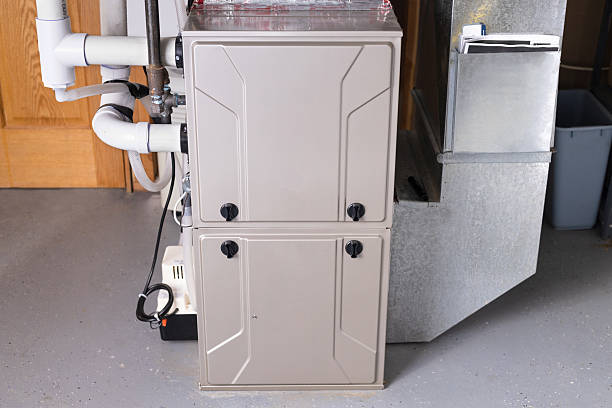
Kansas City winters are not mild. NOAA climate normals put the average January low at roughly 22 to 23 degrees Fahrenheit, and Arctic outbreaks can push temperatures well below zero for days at a time.
A weak part that limps through a 45-degree October night will often fail when the system runs almost nonstop in single digits. And once the first cold snap arrives, no-heat calls flood in across the metro and schedules fill up.
Replacing a furnace in October or early November gives you time to get a proper load calculation, compare efficiency levels, pull the permit, and apply for any rebate. That is hard to do with a cold house.
8 Signs You Need a New Furnace
No single symptom means a furnace is finished. The more of these signs you see together, the stronger the case for replacement.
1. Your Furnace Is 15 Years Old or Older
Age is the starting point for every replacement conversation. The U.S. Department of Energy estimates that a gas furnace lasts about 15 to 20 years, and most of the wear shows up in the final third of that range.
To find the age, check the data plate inside the furnace door. The manufacture date is often listed directly or encoded in the serial number. If you cannot read it, a technician can decode it in a few minutes.
An older furnace is not automatically unsafe. But once it passes 15 years, every repair dollar buys less time, and the efficiency gap between your unit and a new one keeps growing.
2. Repairs Are Becoming a Seasonal Routine
One repair in ten years is normal maintenance. A repair every fall, plus a service call in January, is a pattern.
A common rule of thumb used across the HVAC trade is the 50 percent rule. If a single repair costs more than half the price of a new furnace, or if you have needed more than two repairs in the past year, replacement usually makes more financial sense.
Parts availability matters too. Discontinued control boards or inducer motors on older furnaces can slow repairs and drive up costs.
3. Your Gas Bills Keep Climbing
If your winter gas bills keep rising while your usage habits and the weather stay about the same, your furnace may be losing efficiency.
Efficiency is measured by AFUE, or Annual Fuel Utilization Efficiency. According to the Department of Energy, older low-efficiency furnaces run at roughly 56 to 70 percent AFUE. Mid-efficiency models reach 80 to 83 percent, and high-efficiency condensing furnaces reach 90 to 98.5 percent.
In plain terms, an older furnace at 65 percent AFUE turns 65 cents of every gas dollar into heat. A new 96 percent model turns 96 cents into heat. In a Kansas City winter, that difference adds up quickly. ENERGY STAR estimates that a certified gas furnace in a northern climate can save about $160 per year compared with a baseline model.
4. Some Rooms Stay Cold While Others Overheat
Uneven heat is one of the most common complaints we hear from Kansas City homeowners. The living room is fine, but the upstairs bedrooms or the room over the garage never warm up.
Ductwork or insulation can be the cause. But an aging furnace with a weak blower motor can also struggle to push warm air through the whole house. If you rely on space heaters or keep bumping the thermostat, your furnace may no longer match your home’s heating load.
5. The Furnace Short Cycles or Runs Constantly
A healthy furnace runs in steady cycles. It turns on, heats the home to the set temperature, and shuts off.
Short cycling happens when the furnace starts and stops every few minutes, often because of an overheating limit switch, a clogged filter, or an oversized unit. Constant running usually means the furnace cannot keep up with demand.
Both patterns wear out parts and waste fuel. If simple fixes don’t solve it and the cause is a failing heat exchanger or a badly sized furnace, replacement is usually the better answer.
6. Strange Noises Every Time It Starts
Furnaces make some noise. A soft click and the sound of air moving are normal.
Banging, rattling, squealing, or a loud boom at ignition are not. A boom can point to delayed ignition, where gas builds up before it lights. Squealing often means a failing blower motor, and rattling can signal a loose or cracked component. In an older furnace, new noises deserve an inspection before winter.
7. Yellow Flame, Soot, or Carbon Monoxide Alarms
This is a sign you should never ignore. A gas burner flame should be steady and blue. A yellow, orange, or flickering flame can mean incomplete combustion, which produces carbon monoxide.
Other warning signs include soot or scorch marks around the furnace, excess moisture on windows, a stale or burning smell, and household members who get headaches, dizziness, or nausea that ease when they leave the house.
Carbon monoxide is odorless and colorless. According to the CDC, more than 400 Americans die each year from unintentional carbon monoxide poisoning not linked to fires, more than 100,000 visit an emergency department, and more than 14,000 are hospitalized. The CDC recommends having gas furnaces serviced every year and installing battery-operated or battery-backup CO detectors near every sleeping area.
A cracked heat exchanger is one of the main reasons a furnace becomes a CO risk. Once it cracks, combustion gases can mix with the air circulating through your home. In most cases, a cracked heat exchanger on an older furnace means replacement, not repair.
If your CO alarm sounds, get everyone out of the house, call 911 from outside, and don’t run the furnace until it’s been inspected.
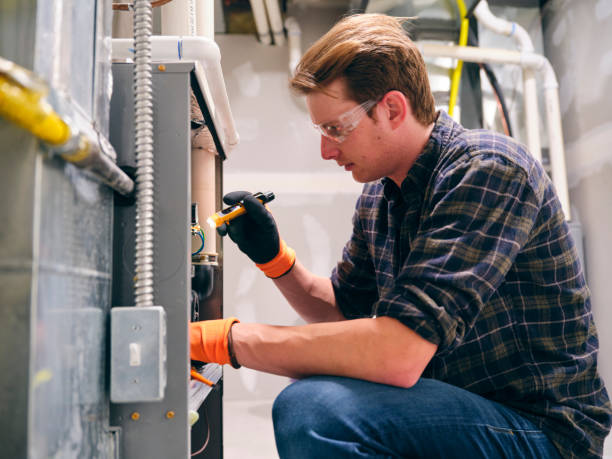
8. Your Furnace Still Uses a Standing Pilot Light
Some older Kansas City furnaces still use a continuous pilot light instead of electronic ignition. The Department of Energy identifies natural gas furnaces with pilot lights as prime candidates for replacement, since that design generally sits in the low-efficiency range. If your pilot keeps going out, plan the upgrade rather than relighting it all winter.
Repair or Replace? A Simple Way to Decide
Most homeowners do not want to replace a furnace that still has good years left. That is the right instinct. The goal is to spend money where it buys the most comfort and safety.
Here is a practical way to think through it:
- Furnace under 10 years old with a single failed part: Repair it. Ignitors, flame sensors, capacitors, and thermostats are routine fixes.
- Furnace 10 to 15 years old with a moderate repair: Repair is usually reasonable, but ask for a replacement quote at the same time so you can compare.
- Furnace over 15 years old with a major repair: Replacement is usually the better value, especially if the repair involves the heat exchanger, inducer motor, or control board.
- Any furnace with a cracked heat exchanger or a confirmed CO problem: Treat it as a safety issue first. Replacement is typically the safe choice.
If you are not sure which group your furnace falls into, start with a diagnostic visit. For newer systems with a single fault, furnace repair in Kansas City from a licensed technician is often all you need to get through the season safely. A good technician will tell you honestly when a repair makes sense and when it is throwing good money after bad.
What Kansas City Requires When You Replace a Furnace
Replacing a furnace is not just a product purchase. In Kansas City, MO, it involves local rules, utility programs, and federal efficiency standards that affect what you can install and what it costs.
A Mechanical Permit Is Required
Kansas City, MO requires a mechanical permit for HVAC equipment replacement, including a like-for-like furnace swap. The City Planning and Development Department handles permits, and inspectors check gas connections, venting, combustion air, and electrical work for safety.
The city expects HVAC work to be performed by a licensed mechanical contractor, unless a homeowner is working on their own owner-occupied residence. A licensed contractor normally pulls the permit and schedules the inspection as part of the job.
Skipping the permit can cause insurance questions and delays when you sell. Ask whether the permit is included in any quote you receive.
Older Chimneys May Need Attention
Many older Kansas City homes vent the furnace through a masonry chimney. The Department of Energy notes that moving to an 80 percent AFUE furnace often requires a chimney liner, while a 90 percent or higher condensing furnace vents separately and may still require a chimney liner for the water heater. A proper quote should address venting.
Spire Rebates for High-Efficiency Furnaces
Spire is the natural gas utility for most of the Kansas City, MO area, and it has run a residential rebate program for high-efficiency gas equipment.
Spire’s 2025 rebate form for its Missouri West service area listed $300 for gas furnaces rated 96 percent AFUE or higher and $200 for furnaces rated 92 to 95.99 percent AFUE. The program required installation by a qualified contractor and excluded self-installs. Rebate amounts and rules change, so confirm the current form directly with Spire before you buy.
The Federal 25C Tax Credit Has Ended
For several years, homeowners could claim a federal tax credit of up to $600 for a qualifying high-efficiency gas furnace. That ended under the One Big Beautiful Bill Act, which terminated the Energy Efficient Home Improvement Credit for equipment placed in service after December 31, 2025.
For a furnace installed in fall 2026, the federal credit is no longer available, so utility rebates are now the main way to lower the upfront cost.
Federal Efficiency Rules Are Changing
In 2023, the Department of Energy finalized a rule requiring most new residential gas furnaces to reach at least 95 percent AFUE, with a compliance date in December 2028. That would effectively end production of standard 80 percent furnaces.
The rule is in flux. In June 2026, the U.S. Supreme Court vacated an appeals court decision upholding it and sent the case back for review, though the rule remains in place for now. The Department of Energy has also considered delaying it.
For Kansas City homeowners, the takeaway is simple: condensing furnaces are the market’s direction, and in a cold climate they usually pay back faster. Price both options now while you still have a choice.
Why Waiting Until the First Cold Snap Costs More
Nursing an old furnace through one more winter sometimes works. When it does not, the costs pile up fast.
You lose your choice of equipment. In an emergency, you install whatever is in stock, not necessarily the right size or efficiency for your home.
You risk damage to the house. A furnace failure during a deep freeze can freeze pipes on exterior walls and in crawl spaces, and a burst pipe can cost more than the furnace.
You put safety at risk. CDC data has long shown that unintentional CO exposures peak from December through February, the same months an aging furnace works hardest.
Planning Your Furnace Replacement in Kansas City Before the First Freeze
The best furnace replacement is the one you plan, not the one that happens to you. If your furnace is over 15 years old and showing even two of the signs above, now is the time to get a professional assessment.
Find your furnace’s age, note any symptoms, and schedule an inspection that includes a heat exchanger check and combustion test. Then ask for a written quote covering the load calculation, efficiency options, venting, the city permit, and rebate paperwork.
All 4 One Heating & Cooling has 26 years of HVAC experience in the Kansas City metro and holds Kansas City, MO and Johnson County contractor licenses. Our technicians run a load calculation to size every system, pull the required Kansas City permit, and walk you through gas, electric, and high-efficiency options in plain terms. If your furnace is ready to retire, our furnace installation in Kansas City service starts with a free quote so you can compare options before winter, not during it.
Call All 4 One Heating & Cooling at (816) 699-8366 to schedule your furnace assessment before the first hard freeze.
FAQ
How long does a furnace last in Kansas City?
Most gas furnaces last about 15 to 20 years, according to Department of Energy estimates. Long run times during Kansas City’s cold winters, skipped maintenance, and incorrect sizing can shorten that range. Annual tune-ups help a furnace reach the upper end of its lifespan.
Do I need a permit to replace a furnace in Kansas City, MO?
Yes. Kansas City, MO requires a mechanical permit for furnace replacement, including like-for-like swaps. A licensed mechanical contractor typically pulls the permit through the City Planning and Development department and schedules the required inspection.
Is there still a federal tax credit for a new furnace in 2026?
No. The federal 25C Energy Efficient Home Improvement Credit ended for equipment placed in service after December 31, 2025. Spire has offered rebates on high-efficiency gas furnaces in Missouri, so check Spire’s current rebate form before you buy.
Can a furnace be repaired if the heat exchanger is cracked?
In most cases, no. A cracked heat exchanger can allow carbon monoxide to mix with the air in your home. For an older furnace, replacement is usually the safest and most cost-effective choice. Turn off the furnace and have it inspected if you suspect a crack.
What is the best time of year to replace a furnace in Kansas City?
Early fall is ideal. September through early November gives you time to compare options, schedule installation, pull the permit, and apply for rebates before demand spikes with the first cold snap.