
A cold shower on a January morning in Kansas City has a way of turning a small plumbing question into an urgent one. The tank in the basement clicks, groans, or just quits, and the first thing every homeowner wants to know is the number: what is this going to cost? The honest answer depends on the part that failed, the age of the unit, and a few Kansas City specifics most national price guides never mention, like the $62 permit the city requires and the mineral-heavy Missouri River water that wears tanks out faster here.
In this guide, you will learn what water heater repair actually costs in Kansas City, MO, which repairs are worth paying for, when replacement is the smarter money, and how local permit rules and water quality change the math. All 4 One Heating & Cooling put this together so you can spot a fair quote before you approve one.
Key Takeaways
- Most Kansas City water heater repairs run $150 to $700 depending on the failed part.
- Kansas City requires a plumbing permit for water heater work, costing roughly $62.
- Thermostat and heating element fixes are cheap; gas valve repairs cost the most.
- Kansas City’s moderately hard water speeds up sediment buildup and shortens tank life.
- Replace instead of repair once repairs top half a new unit’s price.
What Water Heater Repair Costs in Kansas City Right Now
Water heater repair in Kansas City typically falls between $150 and $700, with the national average sitting around $615. That is a wide range on purpose. A loose thermostat and a failed gas control valve are both “water heater repairs,” but one is a thirty-minute swap and the other involves a part that can cost several hundred dollars on its own.
Labor is the constant across every job. Plumbers in the Kansas City metro generally charge $45 to $150 per hour, and most single-component repairs take one to two hours once the technician is on site. Parts stack on top of that, running anywhere from $15 for a simple part to $400 for a control valve assembly. The trip charge or diagnostic fee, usually $75 to $150, is often credited toward the repair if you approve the work.
Here is the part local guides skip. Kansas City costs also carry a permit line most of the time, and that is not padding. More on that below, because it changes what a legitimate quote should look like.
Repair Costs by the Part That Failed
The single biggest driver of your final bill is which component quit. Diagnosing that first is how you avoid overpaying, so it helps to know the going rate for each common repair before the technician hands you a number.
Thermostat Replacement: $100 to $300
The thermostat tells the burner or heating element when to fire. When it fails, you get water that is too hot, not hot enough, or wildly inconsistent. The part itself is inexpensive, so most of this cost is labor and the service call. On an electric unit, a technician often replaces both the upper and lower thermostats at once since the labor to open the panel is already spent.
Heating Element Replacement: $200 to $400
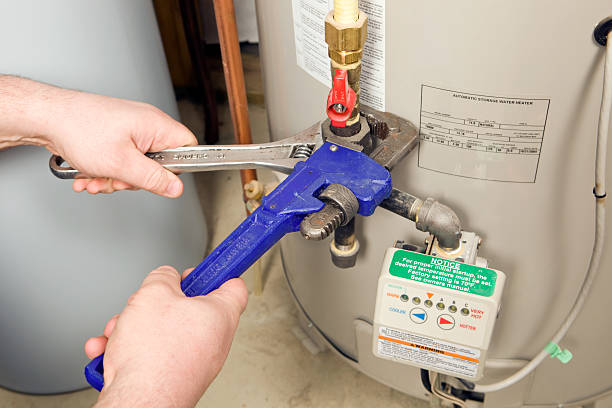
Electric water heaters heat through one or two elements submerged in the tank. When an element burns out, you lose hot water partially or completely. The element is a modest part, but reaching it means draining the tank and pulling the old element, which is where the labor time goes. In Kansas City’s harder water, elements scale over with mineral crust and fail sooner than the national average, which makes this one of the more common calls in the metro.
Gas Control Valve Repair: $300 to $700 or More
On a gas water heater, the control valve regulates gas flow and reads the thermostat. It is the most expensive common repair because the valve assembly is a costly part and the work demands care around a gas line. When a control valve fails, the unit may not light at all. Given the price, this is the repair where the age of your tank matters most, because $600 on a twelve-year-old heater rarely makes sense.
Anode Rod Replacement: $50 to $300
The anode rod is a sacrificial metal rod that corrodes so your tank does not. Once it dissolves, rust attacks the tank itself. Signs of a spent rod include rusty hot water or a rotten-egg smell. A new rod is only $20 to $50, and the job takes about an hour, so this is one of the cheapest ways to add years to a water heater. Plumbers generally recommend swapping it every three to five years, and in Kansas City’s mineral-rich supply, sticking to the shorter end of that window pays off.
Tank Flush and Sediment Removal: Around $200
Sediment is the quiet killer of water heaters. Minerals settle to the bottom of the tank, insulate the burner, force it to work harder, and cause the rumbling or popping sounds many homeowners notice first. A professional flush clears that buildup and restores efficiency. In a hard-water market like Kansas City, an annual or twice-yearly flush is less a luxury and more basic upkeep.
If your unit needs more than a quick component fix, a full water heater service visit can diagnose the tank, the connections, and the venting together, which often costs less than paying for two separate trips.
Why Kansas City Water Heaters Fail Faster
National cost guides treat every water heater like it lives in the same conditions. It does not. Two Kansas City realities shape both how often these units break and what the repairs cost.
The first is water quality. According to KC Water, the city’s treated water averages about 100 mg/L of hardness, which is 5 to 6 grains per gallon, putting it in the moderately hard range. That mineral content precipitates out as scale inside the tank and on the heating elements. Scale insulates the element, makes the burner run longer, drives up energy bills, and shortens the working life of the whole system. It is a direct line from local water chemistry to a repair call, and it is why sediment flushes and element replacements come up more often here than the national data would predict.
The second is the temperature swing. Kansas City winters routinely drop incoming water temperature into the low 40s or colder. A water heater has to work far harder to bring 40-degree water up to a usable 120 degrees than it does heating 65-degree summer water. That winter strain is exactly when older units give out, which is why the December-through-February stretch is peak season for no-hot-water calls across the metro. A unit that limped through autumn often fails on the first hard freeze.
Both factors argue for the same thing: catch problems early. A heater showing small warning signs in October is far cheaper to service than one that dies during a January cold snap.
The Kansas City Permit Rule Nobody Mentions in a Quote
Here is a local detail that separates a licensed pro from a lowball operator. Kansas City requires a plumbing permit for water heater work. According to the City of Kansas City permit office, water heater replacement falls under the city’s single combined permit, and the fee is about $62. The permit must be pulled by a licensed, city-registered plumber, and the city’s Permit Center handles it at City Hall, 414 E 12th St.
For a straightforward component repair, a permit may not always apply, but for a replacement or any work involving the gas line or water connections, it does. A reputable Kansas City plumber pulls that permit and builds the fee into the estimate, then the work gets inspected. A quote that comes in suspiciously low sometimes skips the permit entirely, which can create problems when you sell the home or file an insurance claim on unpermitted work. When you compare bids, a visible permit line is a sign the company is doing it right, not a sign of padding.
Repair or Replace? The Kansas City Math
Not every water heater is worth fixing, and pouring money into a dying tank is the most common mistake homeowners make. Three questions settle it.
First, how old is the unit? The typical water heater lasts 8 to 12 years, and Kansas City’s hard water tends to push units toward the lower end of that range. Rheem notes that once a heater passes the 10-year mark, replacement usually beats another repair. A brand-new tank with a failed part is worth fixing. A 12-year-old tank with the same failure is telling you something.
Second, what does the repair cost against a new unit? The rule of thumb professionals use is simple: if the repair runs more than half the price of a replacement, replace it. A $600 gas valve on a $1,200 new install is a coin flip you will lose, because the rest of that old tank is next in line to fail.
Third, how many times have you fixed it lately? One repair on an otherwise healthy heater is normal. A second or third call within a year or two means the unit is failing in pieces, and each visit is another service charge. At that point a replacement stops the bleeding.
Put simply, repair a young, single-problem tank with a replaceable part. Replace an aging unit that keeps needing help, especially heading into a Kansas City winter when a mid-freeze failure leaves you scrambling.
How to Avoid Overpaying for Water Heater Repair
A fair repair starts with an accurate diagnosis. Insist the technician identify the specific failed component and quote it against the ranges above before any work begins. If a quote skips straight to “you need a whole new unit” without diagnosing the part, get a second opinion, because a $200 element fix and a $1,500 replacement are very different conversations.
Ask three things on every call. What part failed and what does it cost. Whether the job needs a Kansas City permit and whether it is included. And whether the fix is worth it given the tank’s age. Any honest plumber answers all three without hesitation.
Preventive care is where the real savings live. A yearly flush to clear sediment, an anode rod check every few years, and a quick look at the connections cost a fraction of an emergency replacement. In a hard-water city, that maintenance is not optional if you want the tank to reach its full lifespan.
Get a Straight Answer on Your Water Heater in Kansas City
Water heater repair costs in Kansas City come down to three things: the part that failed, the age of your tank, and whether the work is done to code with the proper permit. A thermostat or heating element fix keeps money in your pocket. A gas valve on an aging unit usually points toward replacement. And the city’s moderately hard water means the tank in your basement is working against conditions the national averages never account for, so early attention almost always beats waiting for a total failure on the coldest day of the year.
If your hot water is inconsistent, discolored, or gone entirely, the fastest way to a real number is a proper diagnosis rather than a guess. All 4 One Heating & Cooling handles water heater repair across the Kansas City metro, pulls the required permits, and tells you honestly whether a repair or a replacement makes more sense for your unit. Call 816-699-8366 or contact us to get your water heater looked at before a small problem becomes a cold-shower emergency.
FAQ
How much does water heater repair cost in Kansas City, MO?
Most repairs in Kansas City run between $150 and $700, with the national average around $615. The final cost depends on which part failed. Thermostats and heating elements sit at the lower end, while gas control valve repairs are the most expensive. Labor typically runs $45 to $150 per hour on top of parts.
Do I need a permit to replace a water heater in Kansas City?
Yes. Kansas City requires a plumbing permit for water heater replacement, and the fee is about $62 under the city’s single combined permit. A licensed, city-registered plumber must pull it, and the work is inspected afterward. A reputable company includes this in the estimate rather than skipping it.
Is it worth repairing a water heater or should I replace it?
Repair a unit under 10 years old that has a single failed, replaceable part. Replace it if the tank is older, if the repair costs more than half the price of a new unit, or if you have needed several fixes in a short time. Kansas City’s hard water often pushes tanks toward the lower end of the 8-to-12-year lifespan.
Why does my water heater keep making rumbling noises?
That sound is almost always sediment buildup at the bottom of the tank, which is common in Kansas City because of the area’s moderately hard water. The minerals settle, harden, and force the burner to work through a layer of scale. A professional flush, usually around $200, clears it and restores efficiency.
How often should a water heater be serviced in Kansas City?
Once a year is the standard, and the hard water here makes that timeline worth keeping. An annual flush clears sediment, an anode rod check every three to five years protects the tank from rust, and a quick inspection of the connections catches small leaks early. Regular service is far cheaper than an emergency replacement.