

Your heat pump quit sometime overnight. It’s 14 degrees outside, the outdoor unit is wearing a shell of ice, and the thermostat is calling for auxiliary heat it was never meant to run all day. You want one number before you pick up the phone. The honest answer is that most Kansas City heat pump repairs land between $200 and $1,200, but the part that failed decides everything, and a 2026 repair on an older R-410A system costs meaningfully more than the same repair did two years ago.
Heat pump repair cost in Kansas City, MO typically runs $200 to $1,200, with an average around $750 for a real repair and roughly $89 to $150 for the diagnostic visit. Capacitor, contactor, and thermostat faults sit at the low end ($150 to $450). Reversing valves and compressors sit at the top ($550 to $4,500). Refrigerant work has climbed the fastest, because R-410A wholesale pricing has tripled since the EPA phase-down began. Repairs do not require a Kansas City mechanical permit, but a replacement does.
Key Takeaways
- Most Kansas City heat pump repairs cost $200 to $1,200, averaging near $750 per visit.
- Compressor and reversing valve failures drive the highest bills, ranging from $550 to $4,500 installed.
- R-410A refrigerant now costs $90 to $140 per pound installed, tripling typical recharge pricing since 2023.
- Kansas City requires a mechanical permit for heat pump replacement, but not for standard component repairs.
- Evergy Missouri rebates apply only to new equipment, never to repair work on existing heat pumps.
Heat Pump Repair Cost in Kansas City, MO: The Real Numbers
Start with the local data instead of a national average, because Kansas City labor rates and our climate both push costs off the national line.
Angi’s Kansas City HVAC pricing data puts the average HVAC repair in Kansas City at $324, with heat pump repairs specifically falling between $185 and $1,850. Modernize’s Kansas City figures give a typical range of $200 to $1,200. A local contractor publishing its own ticket data, Climate Control in Kansas City, reports a spread of $350 to $4,500 with an average customer paying around $750, and notes that anything over $1,000 is rare.
Put those three together and the picture is consistent: the typical Kansas City heat pump repair is a few hundred dollars, the average real repair is about $750, and the four-figure bills come from two specific parts.
For comparison, HomeAdvisor’s national data puts most homeowners between $161 and $660 with a $409 average. Kansas City runs higher. That is not price gouging. It is what happens when a single piece of equipment handles both a 100-degree August and a January that averages a 22.5 degree low.
Diagnostic Fees
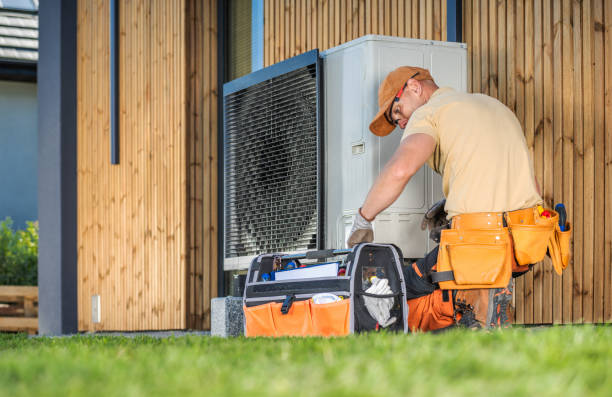
Almost every Kansas City company charges a diagnostic fee before quoting the repair, generally $89 to $150. Many apply it toward the repair if you approve the work the same visit. Ask that question specifically when you book, because a company that waives it on approval effectively gives you a free second opinion.
Heat Pump Repair Cost by Part
This is the table most cost articles skip, and it is the only one that actually predicts your bill. Prices below are installed costs, parts plus labor.
| Failed component | Typical installed cost | How common in KC homes |
| Capacitor | $150 to $400 | Very common, especially after summer |
| Contactor | $150 to $400 | Very common |
| Thermostat | $150 to $500 | Common |
| Defrost control board or sensor | $250 to $650 | Common in Kansas City winters |
| Fan motor (outdoor) | $400 to $900 | Moderate |
| Refrigerant leak repair and recharge | $400 to $1,500 | Common, rising fast |
| Reversing valve | $550 to $1,400 | Less common, high cost |
| Compressor | $1,200 to $4,500 | Rare, usually a replace decision |
Forbes Home puts compressor replacement at $750 to $4,500 with a $2,300 average, and reversing valves at $325 to $625 for the part alone. Blue Water’s 2025 reversing valve breakdown is more useful, splitting it into $200 to $450 for the part and $300 to $850 for labor, since a reversing valve swap means recovering refrigerant, brazing, evacuating, and recharging.
Here’s the practical read on that table: if your technician says capacitor, contactor, or defrost board, you are almost certainly under $650. If they say reversing valve or compressor, you are in replace-or-repair territory and you should ask for both numbers in writing.
Why Kansas City Heat Pumps Fail Differently Than the National Average
A heat pump in Phoenix cools. A heat pump in Kansas City does both jobs hard, and the switching between them is where things break.
Kansas City sits in a transition climate where January averages a 39.6 degree high and a 22.5 degree low, and cold snaps regularly push well below that. That means three specific stresses that generic cost guides never mention.
The defrost cycle runs constantly. When outdoor temperatures sit between roughly 28 and 40 degrees with our humidity, the outdoor coil frosts over repeatedly. The unit reverses itself into cooling mode for a few minutes to melt the ice, then flips back. That cycle can run dozens of times in a single Kansas City week in December. Every one of those cycles works the reversing valve and the defrost board.
Auxiliary heat masks real failures. Most Kansas City heat pumps are paired with electric strip heat or a gas furnace in a dual-fuel setup. When the heat pump underperforms, the backup quietly covers for it. Your house stays warm and your Evergy bill jumps 40 percent. Homeowners often call in February about a bill, not a breakdown, and the underlying fault has been running for weeks.
Mode-switching wear is year-round. Our spring and fall swing 30 degrees in a day. A Kansas City heat pump can heat in the morning and cool in the afternoon in April. That is more reversing valve actuation than a system in a single-season climate will ever see.
All 4 One Heating & Cooling sees this pattern constantly across the metro, from Manheim Park and Brush Creek Boulevard out to Lee’s Summit, Raytown, and Blue Springs. The failures repeat because the climate repeats.
The Refrigerant Rule That Raised Your 2026 Repair Bill
If your heat pump was installed before 2025, it almost certainly runs R-410A, and that single fact is the biggest reason a refrigerant repair costs more this year than it did in 2023.
Effective January 1, 2025, the EPA’s HFC phase-down prohibited manufacturing new residential split-system air conditioners and heat pumps using R-410A. Evergy states this directly on its own heating and cooling page, noting that existing R-410A systems could still be installed until January 1, 2026, and warning customers that R-410A availability will decrease over time and may affect maintenance costs.
The pricing has followed. According to HVAC Calculator Hub’s phase-out analysis, R-410A wholesale prices moved from $8 to $12 per pound to $25 to $45 per pound in some markets within 18 months. Installed, expect $90 to $140 per pound, which turns a routine 2 to 4 pound recharge into a $300 to $600 line item.
Two things follow from that, and both matter for your wallet.
First, a refrigerant leak on an R-410A system is no longer a cheap fix, so “just top it off” is worse advice every year. Topping off a leaking system means paying phase-down prices for refrigerants that will vent again. Find the leak and repair it.
Second, this is a real argument for replacement on older systems that a good contractor should make to you honestly. A 14-year-old R-410A heat pump needing a compressor is not a repair candidate in 2026. New systems ship with R-454B or R-32.
Kansas City Permits, Licensing, and Rebates Before You Pay
This is where Kansas City homeowners lose money, and it has nothing to do with the part that failed.
You Do Not Need a Permit for a Repair. You Do for a Replacement.
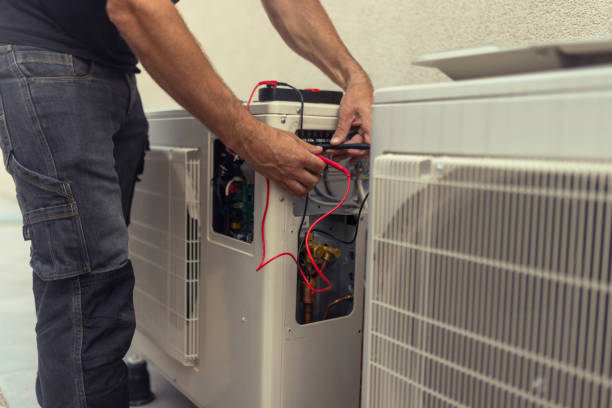
Standard component repairs, including capacitors, contactors, boards, motors, and refrigerant work, do not require a permit. Replacing the system does. Kansas City requires a mechanical permit for HVAC replacement through the City Planning and Development Department, applied for through the CompassKC online system. The Permit Center sits on the 5th floor of City Hall at 414 E 12th Street, and residential mechanical permit fees generally run $75 to $250.
Your contractor pulls that permit and schedules the inspection. If a contractor offers to skip it to save you money, that is a red flag with real consequences. Unpermitted HVAC work can stall a home sale and can void manufacturer warranty coverage.
Verify the License Before You Approve Anything
Missouri does not issue a statewide HVAC license. HVAC and mechanical licensing in Missouri is handled city by city. Kansas City enforces its own requirements through Article XII of the Kansas City Building and Rehabilitation Code, where a technician earns a Certificate of Qualification in the trade and the business then holds a contractor license.
If your home sits on the Kansas side or you are in Overland Park, that is a separate jurisdiction with separate licensing. All 4 One Heating & Cooling holds both a Kansas City, MO contractor license and a Johnson County license, which is why the same crew can work either side of the State Line without a licensing gap.
Rebates Apply to New Equipment, Not Repairs
This trips up a lot of homeowners, so be clear on it. Evergy rebates and utility programs cover new qualifying equipment. They do not cover repairing a heat pump you already own.
If your repair quote pushes you toward replacement, the Evergy Missouri residential rebate chart has paid up to $1,200 for a SEER2 17+ air source heat pump and up to $2,000 for a ground source heat pump replacing operating equipment. Evergy also runs FastTrack HVAC PAYS for Missouri customers, which builds a rebate of $1,000 or more directly into the up-front price and finances the balance on your monthly utility bill with a 3 percent service fee and no credit check. Confirm current amounts with Evergy at 877-987-7112, since program terms change by year.
One thing that is no longer available: the federal 25C tax credit worth up to $2,000 on a qualifying heat pump expired December 31, 2025 under the One Big Beautiful Bill Act. If a contractor quotes you a 2026 replacement and mentions a $2,000 federal credit, they are working from outdated information.
Repair or Replace? The Kansas City Math
The old rule of thumb is the $5,000 rule: multiply the age of the system by the repair cost, and if the result exceeds $5,000, replace it. It is a decent starting point and a poor finishing point, because it ignores refrigerant type.
Here is a more accurate 2026 framework for a Kansas City home.
Repair it if the system is under 10 years old and the fault is a capacitor, contactor, board, motor, or thermostat. These are wear parts. Replacing a $300 capacitor on an 8-year-old heat pump is obviously correct.
Think hard if the system is 10 to 14 years old and needs a reversing valve or a significant refrigerant repair. Run the $5,000 rule, then add the R-410A factor. A $1,200 reversing valve repair on a 12-year-old system is $14,400 on the old math and a coin flip in practice.
Replace it if the system is 12 or more years old and needs a compressor, or if you are facing repeated refrigerant leaks on an R-410A unit. Angi’s Kansas City heat pump data puts average heat pump cost in Kansas City around $5,174, and paying $3,000 toward a compressor on a system nearing the end of its life is money you will spend twice.
A contractor who will not give you both numbers, repair cost and replacement cost, on the same visit is not giving you enough to decide with.
What Moves Your Final Price Up or Down
Two homes in the same Kansas City neighborhood can get different quotes for the same failed part. These are the factors that explain the gap.
Timing. Emergency, after-hours, weekend, and holiday calls carry premiums at most companies. A heat pump that dies at 9pm on a Saturday in January costs more to fix than the same failure on a Tuesday morning.
Labor share. Labor accounts for a large majority of the ticket on complex repairs. A reversing valve is a $200 to $450 part attached to $300 to $850 of skilled labor, because the job requires refrigerant recovery, brazing, evacuation, and recharge.
System type. Ductless heat pump repairs often run higher than standard air-source repairs because of proprietary parts and control boards. Dual-fuel systems add furnace-side diagnostics.
Whether parts are on the truck. Companies stocking capacitors, contactors, and common boards on the van finish in one visit. Companies that order parts charge you a second trip in time, and sometimes in money.
Warranty status. Many heat pumps carry a 10-year parts warranty if the system was registered at installation. That does not cover labor, but it can remove a $600 compressor part from the bill entirely. Check your model and serial number before approving a major repair.
What to Do Before You Approve a Heat Pump Repair in Kansas City
The homeowners who overpay for heat pump repair in Kansas City are rarely the ones who got a bad price. They are the ones who approved a repair without knowing which part failed, what the alternative cost, or whether their warranty covered it.
Before you sign anything, get four things from your technician: the specific component that failed, the installed price in writing, the replacement quote for comparison if the system is over 10 years old, and confirmation of whether the parts warranty applies. Any competent Kansas City contractor will give you all four without being pushed.
Then move quickly. A heat pump running on auxiliary heat is burning money every day it waits, and a small refrigerant leak on an R-410A system gets more expensive with every month of the phase-down.
All 4 One Heating & Cooling has been repairing heat pumps across the Kansas City metro for 26 years, holds both Kansas City, MO and Johnson County contractor licenses, and answers the phone 24 hours a day for the failures that do not wait for business hours. You get the diagnosis in plain terms and an upfront price before any work starts. Call (816) 699-8366 or book heat pump repair in Kansas City, MO for same-day service. If the numbers point toward replacement instead, we will show you that math too and walk you through heat pump installation in Kansas City, MO and the Evergy rebates you qualify for.
FAQ
How much does heat pump repair cost in Kansas City, MO?
Most Kansas City heat pump repairs cost $200 to $1,200, with an average around $750 and a diagnostic fee of roughly $89 to $150. Minor electrical repairs like capacitors and contactors run $150 to $400. Major repairs like reversing valves and compressors run $550 to $4,500. Local data from Angi puts the range at $185 to $1,850 for heat pump work specifically.
Do I need a permit to repair a heat pump in Kansas City?
No. Standard heat pump repairs do not require a permit in Kansas City. Replacing the system does. Kansas City requires a mechanical permit for HVAC replacement through the City Planning and Development Department via CompassKC, with residential fees generally between $75 and $250. Your licensed contractor pulls the permit and schedules the inspection.
Why is my heat pump icing over in Kansas City winters?
Some frost on the outdoor coil is normal below 40 degrees, and the defrost cycle should clear it automatically. Heavy ice that stays points to a defrost control fault, low refrigerant, or blocked airflow around the unit. Kansas City’s freeze-thaw pattern runs the defrost cycle constantly through December and January, which is why defrost boards and sensors are among the most common local failures.
Is heat pump repair getting more expensive in 2026?
Yes, specifically for refrigerant work. R-410A manufacturing for new residential split systems ended January 1, 2025 under the EPA phase-down, and wholesale R-410A pricing has moved from roughly $8 to $12 per pound to $25 to $45 per pound. Installed, refrigerant now runs $90 to $140 per pound, which turns a routine recharge into a $300 to $600 line item.
Can I get an Evergy rebate for repairing my heat pump?
No. Evergy Missouri rebates apply to new qualifying equipment, not to repairs on a system you already own. If your repair quote pushes you toward replacement, the Evergy Missouri rebate chart has paid up to $1,200 for a SEER2 17+ air source heat pump, and the FastTrack HVAC PAYS program builds a $1,000 or larger rebate into the up-front price. The federal 25C tax credit expired December 31, 2025.
Should I repair or replace a 12-year-old heat pump in Kansas City?
It depends on the failed part. A capacitor, board, or motor is worth repairing at 12 years. A compressor usually is not, especially on an R-410A system where future refrigerant costs keep climbing. Apply the $5,000 rule as a starting point, multiplying system age by repair cost, then factor in refrigerant type before deciding.